An Old Friend Returns – Welcome back to Engage the Enemy!
Unfortunately, the free book promotion on Smashwords has ended, but thank you to everyone who picked up one of my books.
One of my favorite stories to tell about my forays into fiction regards a submission that I made to Inferno! magazine. It was a tale set in the grim darkness of the far future in Games Workshop’s world of Warhammer 40K, and it featured my favorite chapter of Space Marines, the Space Wolves. Anyway, I formed a partnership with my co-author who would later write with me as Lee Lightner. Here’s the amusing part of the story – my short story was rejected.
I had received it back and was basically told that it was unusable. I reached out and contacted the editor and to his immense credit, he took the time to tell me what he didn’t like about it (besides everything). I listened to what he said and asked if I rewrote it and returned it to him the next day if he would at least take the time to read it. He said yes. That evening I typed about as fast as I could and stayed up far too late for my own good as I reworked everything. The next day, it was accepted. Ultimately, it led to my two novels, Sons of Fenris and Wolf’s Honour.
Never give up.
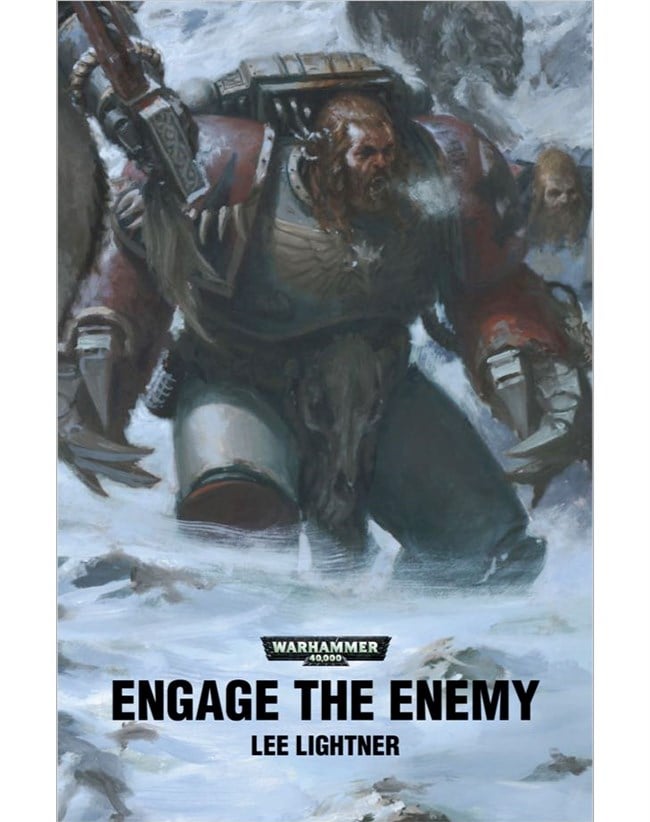
Inferno! is long gone, but Engage the Enemy was republished this week by my good friends at Black Library. No royalties for me on this one, but I’m utterly pleased to see a story that meant so much to me reappear. Here’s the link.
Free E-Books Through March 9th
February went by in a blur. My apologies for not blogging, but I’ve been busy with work and rewrites. I keep having ideas on what to blog at all the wrong times.
Anyway, there is a promotion on Smashwords that runs through March 9 (this Saturday) which includes two of my books, In the Service of the King and Souls of the Everwood. If you create an account and enter RW100 on checkout, you can get them for FREE. I’ve linked them above and you should be able to search by title or author’s name. Free is good, especially for people who check my blog. These are only e-books and for a very limited time.
Additionally, a friend of mine, Brad A. White, has one of his books, Servant of the Muses, entered in the same promotion, and my good friend Wayland Smith has one of his books, In My Brother’s Name, about a terrorist attack on DC, on a 50% off promotion at the same site.
Everyone dealing with winter weather be careful out there.
All the best,
Harrry
My Next Big Thing
There’s a meme going around in the writing world traversing blogs and websites where authors write about their “Next Big Thing.” A friend of mine and fantastic writer, John Rossomongo, mentioned me on his blog, so I thought it was time to contribute. Who am I to get in the way of ideas traversing the internet?
I’m working on several projects, including the sequels to both the Krueger (almost done) and Crimson Hawks novels (close but slightly behind Krueger), a superheroic anthology (also very close but needs art), and Charming with my co-author, John Peck. I hope any or all of those could turn out to be a “big thing.” However, I have a book that I’ve been working on in one form or another for years, and I’m really hoping that it will be published in the next year or two. So, I’m going to write about The Lantern. This should be the first book in an epic fantasy trilogy.
Where did the idea for the book come from?
The idea for the book originally came from a roleplaying campaign that I played in during high school, but it was refined over the years with a lot of inspiration added from Tolkien, Tad Williams, Frank Herbert and George RR Martin.
What genre does this fall under?
Epic fantasy.
Which actors would you choose to play your characters in a movie version?
This is a tough question for me. Between my day job, my various hobbies and trying to write at night, I don’t watch as many movies or TV shows as I’d like. Sadly, I’m going to wimp out and say I’d trust the casting director. For Polaris, the young man at the heart of the novel, I’d want someone with strong eyes and the ability to go from emo wreck to noble prince within a few heartbeats. For Gareth the swordsman, I could see Hugh Jackman pulling him off. I’d want someone with a good sense of humor who can play battered, confused and tough at the same time. For Freyja, I’d like an actress with an ethereal quality, but with the bright intelligence of Jenna Louise-Coleman from Doctor Who. James McAvoy might make a good High Mage Aren. For Mithra, I have no idea, but I think it would be great opportunity for someone. If they could play overconfident arrogant jerk yet still make people not hate them, that would do.
What is a one-sentence synopsis of the book?
Nine years after a great hero vanishes, the fate of the world depends on his son’s ability to unravel the mystery of the lantern left at his bedside.
Will your book be self-published or represented by an agency?
Well, I’d hope that it would be published by a major publisher, however, if I try for a year or two or three, I might self-publish or find a smaller e-publisher.
How long did it take you to write the first draft of your manuscript?
I’d say that I’m still writing it, but honestly, about two years for the very first draft.
What other books would you compare this story to within your genre?
I’d compare it to David Eddings’ Belgariad or Tad Williams’ Memory, Sorrow and Thorn series.
Who or what inspired you to write this book?
I’ve always wanted to write an epic fantasy novel. I’d probably blame my grandfather for giving me a copy of Beowulf when I was younger, but I’d be remiss if I didn’t credit Tolkien, CS Lewis, Lloyd Alexander, and Michael Moorcock. Frank Herbert did a fair share of inspiring me as well, and in recent years, George RR Martin has helped keep me going.
Besides my grandfather, I have so many friends who inspired me from my high school gamemaster to all my friends at American University and everyone at White Wolf Game Studio to everyone who believed in me at Games Workshop. My greatest source of inspiration these days is my daughter, who I suspect will grow up to be far better at telling stories than me. Of course, none of this would be possible without my wife, who has always believed in this story.
Five Folks Whose Next Big Thing Has Me Excited
I’d love to know what Brad White, Myke Cole, CA Suleiman, Wayland Smith and Bill Bridges will be doing next (Phil Brucato keeps me well informed 😀 ).
The Mummies Arise
Happy New Year!
I’ve been away enjoying the holidays and working on projects when I can. My apologies for not posting more, but I’m still hoping to have some good news about Krueger and the Hawks soon.
I wanted to take a moment and let everyone know about a roleplaying game on Kickstarter. Ages ago, I had the privilege of writing for a game called Mummy: The Resurrection. More importantly to me, I had the honor of working with C.A. Suleiman. When I first met him years ago, I worked for a game store named Dream Wizards in Rockville, MD. I was a young freelance writer, and C.A. was a young customer at the store. Lots of people came into that store with their own ideas about games and worlds and stories to be written, but there was something special about C.A. He had that rare mix of willingness to listen combined with the ability to adapt his vision and the strength of character not to give up. He became the author of Cairo by Night, an achievement that he earned from creativity and pure persistance. I was fortunate enough to have the opportunity to stay in touch with him and encourage him over the years. He is an utterly fantastic writer and human being, and I am incredibly proud to have been able to work with him.
Having said all that, C.A. is now on Kickstarter with Mummy: The Curse.
http://www.kickstarter.com/projects/200664283/mummy-the-curse-core-rulebook?ref=live
It should be an amazing game, and I encourage anyone who might be interested to support it. If nothing else, please take a look.
All the best!
Harry
National Novel Writing Month – Chapter 6
Hi everyone,
Just wanted to share the remainder of National Novel Writing Month. It’s definitely a draft and could use some more work, but it was still fun.
Chapter 6
Peleus stood on the wooden deck of the merchant’s ship. Achelos stood beside him. The crew nervously shuffled back and forth. More than a few of them wore bandages, signs of the attack they had suffered. A tall dark skinned man watched the two hoplites carefully, keeping a hand on the hilt of his khopesh. The old man, the one whom Peleus had defended, spoke to them.
“I am truly sorry, but I cannot take you back to Khem,” said the man in Egyptian, spreading his hands wide. “You have my apologies.”
“I don’t understand,” Peleus said. He swallowed and pulled his helmet more tightly under his arm. He had been certain that the Egyptian would have allowed them to return with them. “We will help defend you if you are attacked. We ask for nothing more than a chance to travel with you. We can offer money to pay for our food. We will pay for your passage. We are Corinthians and come from a city of sailors. We have strong backs and can work your oars.”
A breeze blew across the sea and the Egyptian vessel gently bobbed back and forth in response. The older man stayed silent, and for the first time in years, Peleus doubted his command of Egyptian. Had he misspoken? Did the man understand him?
The crew stood quietly, waiting for their master’s response. The man’s brow furrowed and he rubbed his beard, then looked back at Peleus.
“Again, I am sorry. Please understand that I am not a merchant hoping to bring back goods to trade. My name is Sohar. I am a priest. The treasures that I brought with me are sacred and must be protected. We are now in exile.”
“In exile from Khem? Why?”
“There is no Khem anymore, not truly. The land has fallen to Set, the lord of evil, master of scorpions. With foul treason and deathly poisons, he has murdered the pharaoh of the gods, the spirit of Khem, mighty Osiris himself. The pharaoh of the gods is the spirit of the land itself. I thank you for defending me, but I cannot return. I am entrusted with the treasures of the gods. Khem has fallen.”
“Fallen?”
Beside Peleus, Achelos cleared his throat. Not understanding a word of Egyptian, he asked, “Is everything going well? No one looks happy.”
Peleus said quietly in Greek, “It’s fine. I’ll explain later.”
Priest Sohar nodded to Peleus, his eyes filled with understanding and sadness. Peleus was surprised that the priest didn’t find Achelos’ interruption insulting. When Sohar spoke, he gazed out over the sea as if he were witnessing the events that he spoke of. “The battle of the gods has ended, in a terrible final conflict. Legions of warriors fought on both sides. The Nile herself ran red with the blood of the fallen. Other terrible things rose out of the river and crawled from the desert to battle for each side. Swarms of scorpions stung men to death, only to have their stingers break on the backs of Sobek’s children. Sorcerers and magicians flung curses back and forth, and above all of it, the gods themselves waged war.”
Sohar wiped his eyes, and his shoulders sagged. He seemed to age as he stood in front of Peleus. A few of the crew members moved protectively toward him. Peleus now noticed that many of them had sacred tattoos and shaved heads. He wondered if they all were priests.
“Osiris died. It was Set’s blade that pierced him, cutting open his heart and filling his veins with black poison. The god of life is dead. The pharaoh of the gods has fallen. The minions of Set ravage the land. The dead rise from their resting places. Apep, the dread serpent, hungers to devour the sun itself. The land itself is tortured with sandstorms, locusts and plagues. The ground itself shakes in agony. All has been lost. These relics that I possess must be kept safe until the forces of Set are driven away or until time itself ends. I have failed even in that. So many things were recovered, but others have been lost.”
“Is there any hope?”
“Perhaps Ra has strength, but Apep taxes his power each night as the serpent tries to devour the sun. I do not know where to find hope.” Sohar waved his hand over his head. “These events are beyond even a man such as myself.”
“What do you mean?”
Sohar paused. “I am a priest of Osiris.”
“The sun god, Ra, who I know as Helios, spoke to me in a dream. I know it was him. I need to go to Khem. I believe he wants me to go.” Peleus felt sick. Why should he go to a land that had fallen? What good could he do there? Would it be better to face the Furies?
Then a thought struck him. Perhaps he could do something that would lead to redemption. Maybe he could find a way to appease the Furies. If he could serve Ra, serve his true father, then perhaps he could prove to the Furies that Helios was his father. Maybe they could forgive him for what happened. Even if they didn’t, wasn’t the power of a god far greater than that of the Furies?
Sohar nodded. “Helios is the Hellene name for Ra. Go to him. Unfortunately, I cannot travel with you. I must serve Osiris as best I can, and that is by remaining here in exile and keep his memory alive. And here, I will give you something.” He reached into the folds of his clothes and drew forth a golden necklace. “An amulet with the sun disk, blessed by a priestess of Isis. Wear it as a sign of your devotion to Ra. May it protect you. As for your travels, there are many ships in this harbor. If you cannot find a vessel going to Khem, I know that there are traders who sail to Rhodes. The worship of Helios is strong there. If he guides you, he will provide your passage to Khem.”
Peleus held the amulet in his hand. It was heavy, a sure sign that it was gold. The bright disc caught the true light of the sun in the heavens above. Peleus took it as a good omen. He handed his helm to Achelos and then put on the amulet.
“Thank you. I will send word when you can return to your homeland. May the gods watch over you, Sohar, priest of Osiris,” said Peleus.
Peleus walked off the Egyptian vessel and onto the docks with Achelos following. Achelos handed him his helmet.
“So,” said Achelos, “I’m guessing that we aren’t going to start our heroic odyssey on an Egyptian ship?”
“That’s correct. He’s planning to stay. There’s been a war between worshippers of Set and Osiris. Osiris lost.”
“So, how does he fit in?”
“He’s a priest of Osiris.”
“Okay. So, now what?”
“We find a ship to Rhodes,” said Peleus.
“May I make a request?”
“Sure.”
“Let’s not take an Egyptian ship. They may be an ancient people with lore and wisdom from the days of the Titans, but they don’t know how to sail the way Hellenes do.”
Peleus had to agree with Achelos. The Egyptian ships didn’t cut through the water the way a true Hellenic ship would, yet another reason why Corinth and Athens both made arguments that each city ruled the waters. In any event, the Persians wouldn’t argue with either one.
Fortunately, Peleus and Achelos saw some slaves transporting amphorae filled with olive oil onto a ship. A few inquires and an exchange of coins later and both men had booked passage to Rhodes.
“Perhaps, friend Peleus, you will have good fortune in Rhodes. You know that men call it the Isle of the Sun.”
“I like the sound of that. It’s strange, isn’t it, Achelos? Yesterday, I knew the exact course that my life would take. I would inherit the business that my mother has run…”
“May I point out that technically it’s your business since it’s under your name?”
Peleus laughed. “True enough, but everyone knows that it’s my mother’s. Besides, no one would expect me to weave.”
“True enough,” replied Achelos.
“Anyway, who could have guessed that I’d be fleeing my home and heading into the middle of a war in Egypt.”
“Ah, my friend,” said Achelos, “the Fates have their own plans. Besides, you needed to get into trouble. After all, it’s my destiny to be a glorious hero. But, make sure you have your shield to guard my side.”
They both laughed. “I promise,” said Peleus.
The two passengers went below decks. Peleus was suddenly tired, but he wasn’t sure that he wanted to try to sleep.
Nanowrimo is over
Hi everyone,
National Novel Writing Month 2012 has ended. Unfortunately, I got sick immediately afterward. So, I’m recovering from a nasty cold, but I have some good news:

I finally reconnected the dots and got over 50,000 words with about 5 hours to go. I’ll be posting the later chapters, but I’ll warn everyone this year’s effort was definitely a rough draft. I wrote in spiral notebooks, three different computers, a few pads of paper and accomplished my turning point in word count while at my daughter’s Nutcracker day-long rehearsals and shows. It was fun. I’m hoping that I’ll be back to semi-regular blogging soon.
Chronological order? What’s that?
So, I haven’t published any more of Son of Helios, but fortunately, I’m making progress having cleared 13,000 words. That means I’m about 10,000 words behind the pace at the halfway point, assuming that I hold serve on the 15th and don’t fall any further behind. The reason that I haven’t published any more is because I started writing chapters out of order. Since I’m under a tight deadline and having creativity issues, I thought I’d change things around and see if it helped.
I’ve been reminded as I struggle this November that I’m writing a draft. There are a few things that I already think I may change, such as changing the mentions of gold to Corinthian silver and possibly moving Peleus from Corinth to Rhodes, since Rhodes is much more invested in Helios.
One good thing that has happened is that my daughter has been reading Rick Riordan’s Percy Jackson books, to the point that when she was asked to make a sentence for homework using the word “pretty”, she wrote “Aphrodite is pretty.” Absolutely fantastic. So, as I’ve been reviewing Greek and Egyptian legends, she’s happily asking me questions and inspiring me to write more.
Here’s hoping that I’ll get myself together and get another Son of Helios post up soon, though it may be slightly out of order since I may post the next Azura chapter before the next Peleus chapter. We’ll see. The one thing that I’m not going to do is give up. There’s lots of time left, and I know many writers are in similar positions this month. If you are one of them, don’t give up.
All the best!
National Novel Writing Month – Chapter 5 of Son of Helios – new ending
Okay, well one of my characters yelled at me, so I changed the end of Chapter 5. These things happen. 🙂 Here’s the new ending below.
“Of course, I’m coming. As you said, we’ve been friends forever. I can’t leave you.”
“Achelos, you don’t have to do this.”
Achelos smiled. “You’re right, and thanks, after all, Furies? Egypt or Khem or whatever they call it? They have people there with animal heads. I’d be lost. Not to mention having to travel across the sea to get there. You have pirates, sirens, even mad sorceresses and Cyclopes living on the islands if the stories are true.
Peleus chuckled. He wanted Achelos to come with him, but he understood. Leaving Corinth was madness. “Thank you, Achelos. I’ll miss you, my friend.”
Achelos raised his hand. “Hold on. What I was saying is that with that much stuff out there, that much danger, well, someone has to keep you out of trouble.” With an exaggerated sigh, he said, “And the Fates have decreed that it will be me.” He grinned.
The two men grasped forearms. “We are soldiers, we are brothers, we are Corinth,” they said together, repeating one of the many phrases said by the phalanx.
Peleus and Achelos headed for the Egyptian ship. It was time to leave.
National Novel Writing Month – Chapter 5 of Son of Helios
Okay, I am a firm believer that writing over long periods has more to do with sleep management than anything else (except for time sitting in front of a keyboard). Anyway, I got some sleep and finally started catching up. To quote one of my favorite people “Allons-y”!
Chapter 5 – Leaving Corinth
Peleus caught his breath as he passed inside the long walls of Corinth proper. Since he had woken in the eastern port on the Sea of the Ionians, he had paused only to dress, tell his commander that he had served his time guarding the Diolkos, and then run the miles to Corinth proper.
He needed to find his mother. He had to know the truth about what he had done. Had Iphicles been his father? Did Macedonian blood flow through his veins?
Would the Furies come for him?
Once his throat felt as if his heart was no longer pounding inside of it, he pressed on. The Acrocorinth loomed above him, a great rock upon which stood the mighty temple of Helios and the temple of Aphrodite herself.
It did not take long to arrive at his mother’s workshop. Slaves aplenty were already bringing in wool and dyes, and a gray-haired Phoenician and his entourage were negotiating with Peleus’ mother.
“Peleus!” she shouted as she saw him. She waved her hands quickly. “Fortune favors us, my friends. My son has arrived, and his command of your language is far better than my own.”
Peleus saluted the visitors as he took a steadying breath. He wasn’t sure if his heart beat because of the speed which he had crossed the isthmus or out of anticipation of confronting his mother.
“Has there been an attack?” asked the merchant in Phoenician, directing the question to Peleus.
Peleus was surprised by the question. He gripped his helmet tightly as he held it under his arm, aware of the horsehair crest against his skin. “An attack?” he replied in Phoenician. “No.” He paused, “Why do you ask?”
“You seem out of breath. Since you are a soldier, I thought that there might have been an attack. My apologies, but it seems that you Hellenes are always fighting wars. I have trouble keeping track of the alliances. Corinth remains allied with Sparta, doesn’t it?”
“We have been allied with Sparta in the past against Athens, though some would say that Sparta was fortunate to have Corinth as its ally. They may have strength on land, but only our warships can challenge Athens. However, we don’t support their recent attacks against Thebes nor their willingness to lead expeditions into Persia herself,” said Peleus, feeling a sense of pride in his city, but wishing that he knew how to say something than sounded less like the words of a strategos and more like the intelligent response of a diplomat. “But, my apologies for being out of breath. I was in a hurry, as I have some news for my mother, but it will wait. How may we help you?”
His mother glanced at him, obviously able to follow the conversation. He knew she wondered what news he might have, but she was willing to let it wait.
“Ah,” said the Phoenician, now only interested in business, “I have some expensive dyes to sell, and I think that with the announcements regarding the temple, your mother will have the opportunity to make a good profit off of them, as I’m sure that there will be a festival.”
“What announcements?” asked Peleus in Phoenician. Before the merchant could answer, Peleus looked to his mother in surprise and asked her in Greek. “The merchant speaks of an announcement regarding the temple.”
Peleus’ mother looked concerned, but spoke plainly. “Word has come from Delphi that the Oracle has said that the one who we worship as Helios is not a Titan at all. The priests say that Apollo himself watches over Corinth, and the temple will be rededicated and the priests shall offer their services to Apollo instead of Helios.” She added, “I will speak to you about it more, but it means that the sun on your shield represents Apollo himself.”
Peleus fell silent. The Olympian, Apollo, worshipped instead of Helios? The priests said that in the days before Corinthos himself, when the mighty city-state had been but a collection of villages, still men had gathered on the Acrocorinth to sacrifice to Helios and praise the sun. This was a ploy, a lie, a grab for power by Delphi, perhaps engineered by the corrupt leaders of Athens, the jealous merchants of Argos or even vain Sparta. The affairs of cities and countries were not something he could change, but now, they affected his god, his father.
He felt his face flush, but he let his breath out slowly, forcing himself to become calm. There was a merchant here, and he managed a smile. “Indeed,” he said in Phoenician, “the Fates weave many opportunities.”
The conversation continued through dyes and fabrics and turned to the delivery of shipments and the exchange of gold. For Peleus, the talk gave him a chance to let his emotions subside and gave him time to think about the revelations of the morning and the day before. He had no answers, but he felt that he might be able to let reason guide him instead of his passions. Finally, the Phoenician departed, seeming pleased, and he was able to retreat to a back room in the workshop and speak to his mother.
“Thank you, my son. If you didn’t have to spend so much time behind your shield, you would earn great wealth for our family. You have such a gift for speech and for reading and writing. You know, I was often told that you should join the priesthood.” Her voice was soft and she gently touched him on the shoulder.
“You mean the priesthood that has betrayed my father, Helios, and given over all of his works to Apollo at the behest of some drug-ridden priestess from a far off land?” Anger filled his words, and he regretted the tone immediately. He didn’t want to vent his anger or even his fear upon his mother, but something inside him inflamed his tongue and forced the emotion out of him.
“Peleus, I know that you understand that Helios isn’t your true father. All the boys without a father are said to be sons of Helios, just as all the girls are said to be daughters of Aphrodite.”
“And what of a Macedonian mercenary named Iphicles who once loved a priestess of Aphrodite named Dione? What of him?”
The silence was dreadful. Peleus felt as if Zeus himself had thrown a thunderbolt down in the room, yet there was no sound at all. His mother’s face was strange, as if she were a statue and the sculptor who carved her had not known what expression to create and had tried to show everything and nothing at the same time.
“How do you know of him?” she whispered. She blinked several times, and her eyes became wider with each blink. “How? Was he involved in the incident yesterday?”
“Yes,” said Peleus, now blinking himself. His words came out more slowly now, though his face flushed again. “As was I.”
“I feared you might be, but after all this time, I’m not going to close the workshop to find out if you were hurt every time blood is spilled on the Diolkos. Is he…?”
“He is dead.”
She gasped. “No.”
“I killed him.”
“What?” She flew to her feet. “You killed him?” The strange lack of expression was now replaced by the most terrified look Peleus had ever seen.
“I killed him.”
“Peleus, he was your father!”
“Mother, Helios is my father! He has always been my father. He is the only father I ever knew.”
“No, no, no,” she said.
“Why didn’t you tell me his name? Why couldn’t you have warned me?” he asked, gesturing dramatically. His helm fell from where he had held it beneath his arm with a clatter. “You knew! I didn’t.”
It was as if his mother had aged decades in moments. She kept shaking her head. “Aphrodite, why have you let this come to pass? What curse have you placed on me for leaving your service? Why didn’t you torture me? Why did you let this horrible thing happen to my son, my only child, my baby?” She leaned her head back and gazed at the ceiling. Tears swam down her cheeks. “Why?” She started choking and coughing, and then slipped slowly down into a heap on the floor.
Peleus bent down to her. “Mother, what is done is done. I am so sorry. I am so sorry. Last night, a dream came to me, a terrible horrifying dream that seemed as real as you are now.”
She continued to sob. If she heard him, she gave no sign.
“Mother, the Furies tried to take me.”
A sob caught in her throat. “The Furies? No! Aphrodite, no! Son, you cannot escape them. You know the stories of their unquenchable thirst for justice. You will die for your crime, a crime that I could have prevented. He didn’t know. I thought he must have been killed, but now, I have killed you both.”
Peleus knelt down in front of his mother. He tenderly embraced her. “Mother, dear wonderful Mother, I do not blame you for what has happened. The strands of my life are woven by the Fates. We cannot change the past. I know the stories, and I know that many men have fled the Furies.”
“But none ever escaped.”
“Perhaps there is no escape forever, but the thought of traveling to other lands, to use my gifts and experience the world has an allure to me. I will take the time that I am given, but I am not so sure that the Furies are unstoppable. If my crime is killing my father, then I will argue with my last breath that I am innocent. Helios has always been my father. He is the one I spoke to in my heart when I struggled. When I stare at his statue, I feel his inspiration. I have tried to prove worthy of him, just as any son wishes to make his father proud.”
“Helios cannot protect you.”
“He already has. I called to him in my dream, and he drove off the Furies.” Peleus squeezed her a little more tightly, careful not to press her too hard against his armor. “Helios will protect me.” He chose not to mention the woman who spoke Egyptian. “Mother… did you love him? Iphicles?”
A bitter sound came from his mother. “We loved, and he showered me with gifts and fortune, but then he left and he never returned. I loved that he gave me you, but if I had loved him, truly loved him, you would never have doubted who your father was.”
“I never have doubted who my father is. I know.”
They both stood. She wiped her tears away. Resolve filled her face. His mother had always been strong and now, she was so again. “If you are to flee, you must do so. The Furies will not hesitate, they will not pause, and they will pursue you until the ends of the earth, until the end of your days. I will give you gold, but I don’t know what else I can do.”
“I’ll gladly take the gift of gold, and I will carry with me my provisions and equipment from campaigning. Please explain when my time of service comes and I am not found that I will return to serve Corinth when I am able. I love my city, and I always want to know that I could return. And I will return.”
“Aphrodite took Iphicles because I told her that I would leave her service. Now, she takes my son.”
Peleus decided not to argue. All of the talk of the gods made him think of his dream and the lashes of the Furies. It was time to leave. He picked up his helm.
His mother gave him a pouch of coins, all marked with the Pegasus of Corinth. Peleus briefly wondered if such coins would become strange to him after years of travel, but he quickly dismissed that thought. This was the time to flee the Furies, not to contemplate all that he was losing.
He said farewell to some of the slaves who he respected and liked. He considered that he was not much different from those whom the Fates had placed on the wrong side in the wars with Athens and her league. He shared a last embrace with his mother.
“I love you, Mother. I will return.”
“I love you, my son. May the Fates be kind.”
He walked the road back to the sea of the Ionians. He had passed out of the gate of Corinth proper, when he encountered a familiar figure.
“Thank the gods that I didn’t have to scour the entire Peloponnesus for you. Was there a problem at home? Is your mother okay?” asked Achelos. “Or were you trying to explain that you killed a mercenary captain? You know that I’m sure she had heard already.”
“Achelos, we have been friends all of our lives,” Peleus started, continued to walk along the road.
Achelos joined him and sighed. “Yes, well, that’s true, but I’ve never really liked you.”
Both men laughed.
“That man that I killed yesterday wasn’t just a mercenary captain.”
“I know. He sired you, and you killed him.”
Peleus stopped. “How did you know?”
Achelos looked down and cleared his throat. “I realize that you were unaware of anything but your duel, but I was next to you and I did hear him whisper the name Dione when he was dying, and I know your mother’s name, oh, and then there was the way you didn’t speak or say anything afterward and returned to the eastern barracks and went to bed though it was barely afternoon. Now, I understand that I might not be a great philosopher, but I’m not an idiot either.” Despite the hint of a mocking smile on his face, Peleus saw nothing but concern and sympathy in his friend’s eyes.
“I need to find the Egyptian merchant.”
“That’s easy enough. So, are you going to be okay? I mean, considering what normally passes for okay when it comes to you – practicing overly hard against invisible opponents while trying to make up words so that even Persians pretend to understand you, and staring with wonder and amazement at ships moving across the isthmus, that sort of thing.”
“I’m doing my best,” answered Peleus.
The two men walked together beneath the blue sky, past green scrub and brown hills. They said nothing, but Peleus found Achelos’ presence reassuring. They reached the port, passing the Pillar of Theseus which marked the separation of Ionia and the Peloponnesus, all too soon.
“I need to go. The gods spoke to me. The Furies pursue me. I have to leave Corinth, even Hellas itself. You don’t have to come with me, Achelos.”
“I know I don’t have to, but we are friends and well, I found you and dragged you into this mess. There’s the Egyptian ship ahead. The gold has been returned to them, but I think most of it went into warehouses. Some, of course, will be used to pay for our services in protecting him from the pirates.”
“What happened to the mercenaries?” Peleus asked.
“A few were sold into slavery, but most are going to stand on the border. Things are growing worse with Sparta. Thebans came to speak to our leaders and you know their opinions of the Spartans. We might even ally ourselves with the Athenians before all is said and done. The Persians are said to approve of an alliance between ourselves and Thebes. They haven’t forgotten the tales of Leonidas and the 300 any more than we have.”
Peleus sighed. He understood why the Phoenician merchant couldn’t keep track of the alliances of the city-states. He wasn’t sure if anyone could.
“I’m going to Khem.”
“May the gods watch over you. I’m sure the merchant will take you.”
“Are you coming?”
“Of course, I’m coming. As you said, we’ve been friends forever. I can’t leave you.”
“Achelos, you don’t have to do this.”
Achelos smiled. “You’re right, and I’m sorry, but I’m not. I’m not going. Just a last joke. I want to come with you, Peleus, but Furies? Egypt or Khem or whatever they call it? They have people there with animal heads. I’d be lost. Besides, I’m a Corinthian. I’ll be here, but I will promise to do one thing for you. I’ll watch out for your mother.”
Peleus chuckled. He wanted Achelos to come with him, but he understood. Leaving Corinth was madness. “Thank you, Achelos. I’ll miss you, my friend.”
The two men grasped forearms. “We are soldiers, we are brothers, we are Corinth,” they said together, repeating one of the many phrases said by the phalanx.
Peleus finally turned away and headed for the Egyptian ship. It was time to leave.
National Novel Writing Month – Chapter 4 of Son of Helios
Another day and another post. I’m about 10,000 words off the pace, but strangely that seems about par for me at this point in the month. It just means that everything will get exciting at the end. Here’s the raw form of Chapter 4. Enjoy!
Chapter 4
“High Priestess, wake up. Please, wake up. We need you.”
Azura opened her eyes slowly. Something cool pressed against her lips as gentle hands helped to raise her into a seated position. She saw familiar pillars and tiles, covered in hieroglyphics praising the gods. The gentle sound of the holy fountain welcomed her. Though she didn’t know how, she had made it home.
“Please drink, High Priestess. You need water,” said one of the young priestesses, holding a golden cup to her lips. She was more a girl than a woman, and Azura couldn’t remember her name at first. Truthfully, she could barely remember her own name. The water crossed her dry lips, and she felt it run down her throat, soothing and cooling her.
How long had she been without water? How had she returned from the Pinnacle of the Phoenix? Had she climbed the thousand stairs to the peak? Or had it been just a dream?
“There are enemies, High Priestess. We need you. You must inspire the temple guards to victory,” said the young priestess. Her name was Sakhmet. Azura smiled – pleased that her thoughts were returning.
She gazed over at the wall. Isis stood behind Osiris as he battled with Set. An emptiness grew inside Azura. She trembled.
“Child,” said a woman whose strong voice she recognized. It was Nakhat, another priestess, and currently one of the women supporting her. Nakhat addressed Sakhmet, “the High Priestess has no strength. She is wounded. Another of us must invoke the gods to aid the guards in their battle.”
Azura turned her attention to Nakhat, a tall beauty, adorned with gold bracelets, jet black hair falling straight on her shoulders. The woman had a gleam in her eyes which left Azura feeling unsettled.
“You know that it must be me, High Priestess,” Nakhat said. “Let me take the wings as my own. Let me channel the power of the gods.” She quietly whispered, “If they have any strength left to give.”
Azura tried to speak, but it was so hard. She felt as if she had fallen from the heavens and though her body had returned, her mind still soared high above. Her lips moved, but no words came out. She sipped at the water again.
“The gods still endure,” she managed.
“What did you see?” asked Sakhmet, holding the cup close to Azura.
“I reached the pinnacle. The flame burns. The sun god still has strength.”
Nakhat squeezed Azura’s shoulder, leaned closer and said, “Osiris is dead. The pharaoh, the living god, has died. The strength of the Nubian lords has failed. Set rules Khem now. Even if Ra still sails the heavens for now, how long before even he falls, before the sun fails to rise at dawn? Our only hope is to struggle, to hope that the spells of Isis protect us and that we die with our souls intact that we may travel to the land of the death and serve Osiris for eternity. I will don the wings and go to meet the enemy in your stead.”
Azura shook her head. This was wrong. “No. No. Who is this enemy? Are they the legions of Set? Who are they?” She paused, uncertain of what else to say. Images and memories swirled around her. “The necropolis,” she whispered, not exactly knowing why, “Are they from the necropolis? Are they living or dead?”
“They are not the legions of Set. They are rapacious Hellenes, mercenaries who failed the pharaoh,” said another priestess who had a familiar face with pleasant eyes, and yet, her name completely escaped Azura.
Azura had a memory of a Hellene, a criminal punished by his own gods, and yet, he called on Helios, the name which the records claimed that the ancient rulers of the rocky lands of those northern city-states had used for Ra. Had it been a vision or something that truly happened?
“Only I may wear the wings of the goddess,” said Azura with a forcefulness that felt odd, but at the same time, strength had returned to her limbs, so she stood. Perhaps this was a gift from the goddess.
“How did I return to you?” she asked the other priestesses. From outside, she could hear the shouts of the guards.
“You were found outside the temple walls, moaning and lying in the sand. We saw the burns on your shoulders and thought you had been attacked,” said young Sakhmet.
Azura reached to her shoulders, crossing her arms in front of her chest. On each one there were marks, burns that had not been there before. “Do you know what these are?”
“No,” said Nakhet. “We do not.”
Something about her tone gave Azura a sense of danger. She stared hard at Nakhet and stepped toward her. The other woman backed away.
Azura wasn’t sure of what she was about to do, but it seemed right. She hoped that her feelings came from divine inspiration and not desert-induced madness. She pointed at Nakhet. “You have betrayed Isis. You have betrayed Khem. You have whispered prayers to the god of scorpions and jackels, dread Set himself. You would despoil the sacred wings. You would give all of our souls to the lord of darkness.”
Nakhet’s reaction was sudden and fierce. She did not even try to deny the accusation. “And if I would? Set has won. The new pharaoh will be filled with his spirit, not that of Osiris. We should serve him and revere Nephthys, his wife, rather than fallen Osiris.”
With a scream, the girl Sakhmet charged into Nakhet. The older priestess tensed, and the girl drew back, but as she did, all of the priestesses saw a blade hilt jutting out of Nakhet’s stomach. An ever-widening red stain spread across her white clothes. Nakhet grasped the hilt of the blade, but fell before she could draw it out.
“Forgive me, High Priestess,” she gasped, “but there is no hope for us.”
Azura heard Sakhmet sobbing softly, and yet, the girl had done what was right. “Her soul must be weighed in judgment and she took on the burden of betraying all of us and the gods themselves. I fear we shall not see her in the afterlife.”
Azura went over to Sakhmet. “You have done well, defending Isis and all that is good even in this time of dread.” She hugged her, and the sobbing stopped. After she let go of the young priestess, she looked to the others. “I will need the wings if I am to face our enemy. I will need the signs of the gods painted on my flesh. My strength has returned. I am ready.”
 Harry Heckel